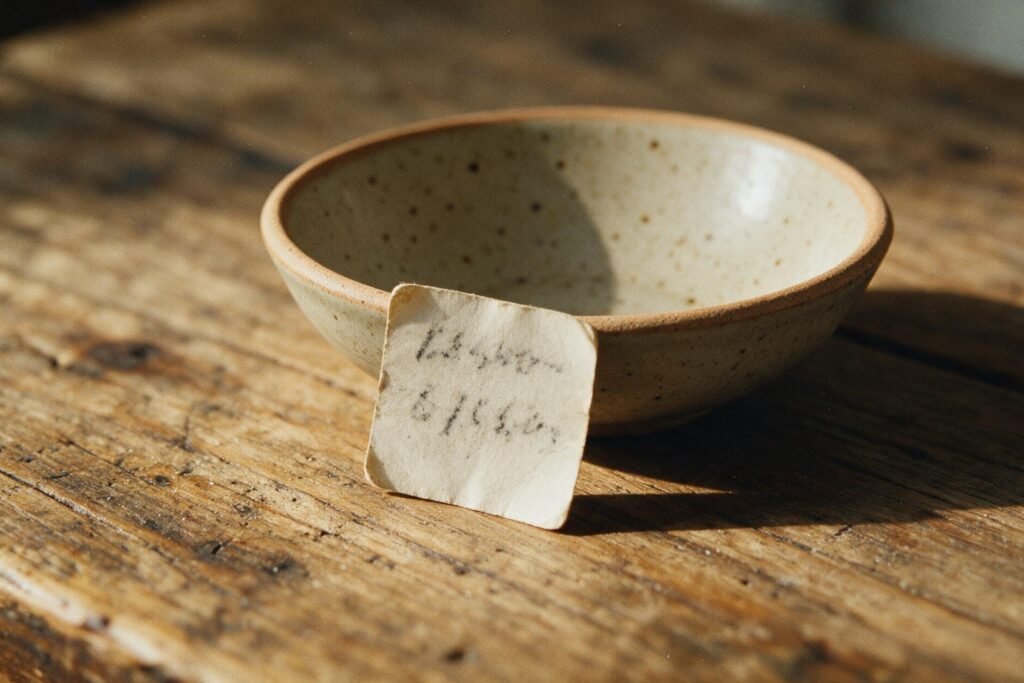
A bowl at forty dollars does not sell. The same bowl at thirty-eight sells, three times, before noon. Nothing changed in the clay.
Price is not a number you calculate. It is a sentence you say out loud, and the visitor hears the sentence before they see the piece.
Round numbers sound like a decision
Forty sounds like a price someone set. Thirty-eight sounds like a price someone arrived at — clay, glaze, the hours, the fire, the table fee, and then a number. Buyers at fairs are not comparing you to a shop; they are trying to understand why this object costs what it costs. A price that looks calculated invites the question. A price that looks rounded ends the conversation before it starts.
The number you are afraid to say
Most makers underprice the piece they are proudest of, because they are pricing the material and not the object. The material is cheap. The object is the thing the visitor will still have in ten years. If you would not sell it at that price, the price is wrong — not the piece.
Do not discount in front of people
The visitor who watched you drop the price for someone else at two o’clock will wait until four. And the person who paid full price at eleven will learn, from the friend they came with, that they could have waited. A fair is a small village for two days. Everyone talks.
Let the price be a small sign, not a negotiation
Write it. Put it in front of the piece, in your handwriting if you can. The handwriting does more than the number: it says a person made this, and a person decided what it is worth. That is the whole difference between a table at a fair and a shelf in a store.
And when someone says “it is a little expensive”, the honest answer is not a discount. It is the story of the piece — how long it took, what went wrong in the kiln, why this one and not the other nine. Half the time, the story is what they came for.
For sellers: the same question, from behind the table, is at Ring & Ship.